Showing posts with label Social networking. Show all posts

Tuesday, December 6, 2011

Wanting another generation


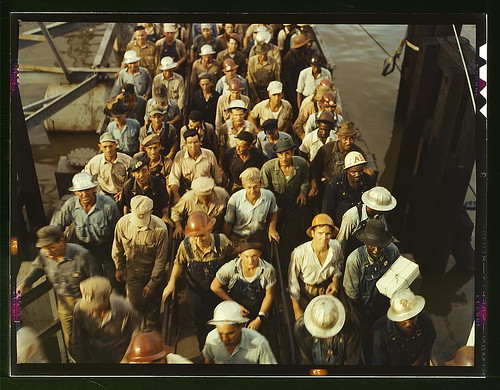
The popularity of Instagram, the photo sharing application that adds 'vintage' filters to each photo, is to me another indication of that today's connected generation also has a nostalgic want for a simpler life.

I won't theorise too deeply about this, but I do think that with world markets trembling, youth unemployment consistently increasing and the unfulfilled promises of university degrees there is a wanting for our memories of these times to be more rosy than they actually are.

Using applications like Instagram to remember today's ambivalence with sunbursts, overexposures and hazy blurs, this unfulfilled generation is in effect adding the layer of promise of the post-war 40/50s where these giant leaps in instant photographs were first seen.

The irony that it has taken technology developed in this generation to take today's memories back into a more promising generation has not been lost.

Tuesday, September 27, 2011

US mobile phone usage - hyperconnected youth

There aren't many digital and media stats that make my jaw drop. Sure, Facebook's stats are staggering, but its walled garden business model has helped it create a near monopoly on family social networking.

Then along comes a Pew Internet study that shows that:

Young adults are the most avid texters by a wide margin. Cell owners between the ages of 18 and 24 exchange an average of 109.5 messages on a normal day—that works out to more than 3,200 texts per month—and the typical or median cell owner in this age group sends or receives 50 messages per day (or 1500 messages per month).

An average exchange of 109.5 text messages per day.

That made my jaw drop. Maybe because now that I'm 30 i'm considered a mobile senior citizen or maybe I just don't have many friends.

Consider the time it would take to receive then send that many messages and then add other social networking activities such as Facebook and Twitter. That is dedication to connection.

The Pew Internet and American Life Project contains plenty of informative research, have a good read.

Friday, September 10, 2010

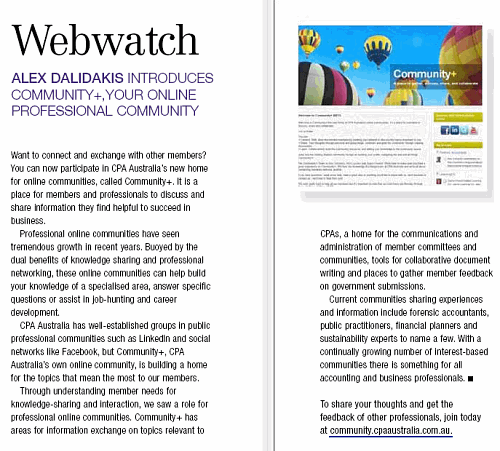
Online communities for accountants

So, the time has come that I finally get my name into the press (the printed press I mean...). Here is the article from CPA Australia's InTheBlack magazine (circulation 124,858).

Read it online here.

Tuesday, May 25, 2010

Continued socialisation of TV

NewTeeVee has reported that a new service called Tunerfish via Comcast is emerging and it's being billed as Foursquare for video.

While I'm a little ambivalent towards Foursquare (mostly because of its hijacking of Twitter feeds) I do really like that Foursquare is using gaming mechanisms to build community and this is what Tunerfish will supposedly do for TV.

To understand the potential for a service such as Tunersfish take the example of the Lost finale and its corresponding Twitter-stream (graphic on right from NewTeeVee). For Australia the TV show Q and A has ridden the Twitter-stream well incorporating the #qanda hash-tag into its show each week.

You can see that by combining Twitter and TV the once solitary act of watching TV by yourself is becoming a much more social affair. Tunerfish aims to tap this social wave and amplify its effect by game-ifying (I'm gonna TM that!) it.

Like browsing my Twitter feed to find out what people I follow are watching, Tunerfish will aim to be a social discovery mechanism where you find out what your social circle is watching. Now, for myself, I don't have Pay TV so I only have a limited number of channels to watch, but even still the idea of finding our what shows are popular and then watching them by totally legal and broadcaster friendly means is a good one.

Tunerfish is in private Alpha at the moment so I don't know how it really works but the idea of adding game functions to a solitary/social activity is a catchy one.

From a personal perspective the only question I would have is that will it be service agnostic? Because it is being developed by Comcast will someone need to watch TV via a Comcast service or will it be a generic web app for all to use?

Monday, March 22, 2010

Integrating your loyalty program into your customers communities

So you're a retailer and you have a customer loyalty program, nothing new there, everyone does. But until now this has been a mostly one-to-one relationship. Maybe you're a forward thinking company like Sears and have built a community for your loyalty program or like Best Buy and built a youth community for a specific segment of your customers. Breaking the one-to-one mould and exposing loyal customers to each other, great.

This means big bikkies to create a community platform from scratch and one of the down sides of this is that your brand is essentially insulated within its own community boundaries. For smaller retailers there is an alternative that can generate exposure as well as community.

I originally got on this train of thought when I read a blog post by platform vendor Lithium and their integration of Foursquare into their platform. This was more of a comment on bringing outside community mentions into an enterprise community, but the concept of blending inside and outside communities is essentially the same.

And now I have come across Tasti D-lite, a US ice-cream chain that has really taken social media integration to the next level for small business.

You can read more about how Tasti D-lite have brought social media into their loyalty program here, but essentially what they have done is leverage the power of their customer's existing free and public networks to promote their own loyalty program.

For USD$10,000 Tasti D-lite integrated Twitter and Foursquare into their loyalty program and POS system so that when a transaction is made using the loyalty program card a Tweet is sent with how many points were awarded and a check-in is made in Foursquare for the customer.

Setting aside the mammoth amount of small business activity in Facebook, this example shows how for relatively small amounts of money small businesses can leverage the power of their customer's existing networks to build brand and loyalty together.

Tuesday, January 12, 2010

What's the use of social ratings?

Welcome to 2010! Bad Religion may have been a couple of billion people off predicting 10bn in 2010, but we'll let that one slide.

One of the other things that is upon us in 2010 is the long tail of social media ratings and measurements. My previous post started a list of ways online communities and websites are now managing a measuring reputation and community involvement. Now what I am finding is that, like many ideas on the Web, the long tail of obscure and sometimes half-baked ideas is stretching the usefulness and relevance of community input variables.

I mention this because today Jeremiah Owyang pointed towards the KickApps mood widget (right) on the NBC New York news site. You can now rate how an article on the news site makes you feel. Based on a pre-defined set of moods you can help define how the city of New York is 'feeling'.

This made me recall the Yelp review widget where you can say whether a restaurant review was useful, funny or cool (below). These 'mood' or semantic ratings seem a little odd to me. There are two reasons for this feeling. One, as a reader or community member I do not see value being created by defining articles by semantic terms unrelated for the most part to the actual article. In Yelp's case, would I choose to go to a restaurant because a reviewer the reviewed the restaurant is considered funny? Or will I post more restaurant reviews because people think my reviews are cool? I dunno.

As for the moods on NBC New York, do I get value out of the fact that readers are thrilled about an article on Marijuana and bored about an article on politics? As a rating it does not make one thing more valuable than another because the variables are nominal. Possibly I might want to search for 'thrilling' articles, I probably wouldn't search 'boring' articles.

Which brings me to point two, browse-ability and search-ability. Presumably these ratings/variables have been created to be useful for website/community users. But if you cannot filter any of the variables then how can they be useful? A good rating or social measure in a community should both provide value to the content creator (people think this is great!) and value to the rater (that article is great! I'll rate it 5 stars so more people can see it). Update: Thanks to reader JZ, they've pointed me to the NBC Mood Board where you can filter based on mood.

Both Yelp and NBC/KickApps have gone half way with their semantic ratings, and there is nothing wrong choosing nominal variables to try to define a mood or a feeling, but thats only the half of it. The other half is the usefulness half, ask, "how will other people find this useful?"

Ratings, reputations, rewards, and now feelings, are all ways communities are trying to promote the value community members receive from the community, but for these things to catch on the members need positive and tangible results from their interactions that can further deepen their connection with the community.

Tuesday, September 1, 2009

Social media from outside the marketing department


It's been a little over 12 months since I left the marketing department at work. I'm now sitting in a small team that is curiously called Knowledge Exchange and essentially our role is to "help members connect with each other online and share experiences" (that's how I put it).

I've had a fantastic time in the role because it has given me the freedom to voraciously learn about everything that online collaboration/networking/sharing can offer. I've got my million-and-one accounts on every service possible; I'm talking to people I would never have met were it not for the Interwebz and all up I think I've had a bloody educational year.

But one of the biggest things that it has taught me is that doing this stuff just ain't natural to everyone. For the past four or five months I've been having regular catch-ups with my old marketing team to get them on-board as advocates for online collaboration.

While it is true a person's need is the first step in deciding what and indeed if collaboration should be online, in these meetings we've decided to have a bit of a taste-test to learn about the fun things that live online. The team has tasted forums, blogs, micro-blogs, wikis, LinkedIn, Facebook, YouTube... the works. And in the end I think that the biggest learning I've had is that for most of these tools and platforms you simply can't explain the benefit - you have to experience the benefit.

And that's a bloody hard sell. The whole "trust me" line just doesn't cut the mustard when a member receives their 4th email for the month.

Deborah Schultz, partner at the emerging tech strategy consultancy Altimeter, also shows in her P&G digital hack night, the 'jump-in' mind-set of a digital native/convert is different from the 'planned' marketing mind-set. Marketing, as creative as it might sound to the outsider, is actually about tangible benefits and direct outputs - $1,000 input gives me 6% return gives me $20,000 sales. It's logical, it's tested, it works. Marketing reads the instructions, figures out how it works and then applies the correct procedures.

Sitting outside the marketing department has given me a new appreciation for the act of marketing, especially in this new world of 'experiences'. The digital native/convert has accepted that the world simply has too many experiences and opportunities to sit down and read the instructions. You simply gotta jump in and go for a ride. If you don't like it get out, get in the next one, try something else. You'll find the one that you get a benefit from soon enough. Try marketing that! And everybody's 'it' is different to the next.

The best I could say is get your story right and tell your story through the experiences that you market. And it doesn't all have to be digital. Red Bull is a great example of a company/brand that has a story to tell through the experiences it markets and I bet their marketing spend is 90% off-line.

So in a little over twelve months a curious thing has happened to me, my walls of data and measures that direct-marketing taught me have started to crumble. Instead I'm now talking about stories and experiences, about failing, collaborating, talking with people not at them.

... I think I have a long way to go to win over the marketing department but I'll keep working at it. Good luck to all you other digitals out there converting the analogue marketing departments of yesterday.

Wednesday, August 5, 2009

It's baby steps for Sony with online content


Ok, ok. Last post I may have heaped praise on Sony for doing the right thing by Jill and Kevin on YouTube. Maybe it was a little premature.

Today I read in the Guardian Rhodri Marsden has had a take-down notice from Sony slapped on one of his videos. Turns out Sony doesn't like it when their artists are put up in a humorous light.

The video Rhodri describes highlights the somewhat bizarre ramblings of young up-and-comer Ray Gun. I can see why Sony would have slapped the take-down notice on the video if it doesn't show Ray Gun in a good light, but you can't blame Rhodri for trying.

If Sony are going to go ahead and profit off videos such as Jill and Kevin then they should be willing to let others that might be a little left-of-centre go online too. The very least that can be said is that by profiting off a select few user-generated videos Sony has given implicate permission to all online users to use Sony content whenever they want.

Tuesday, July 21, 2009

Ratings and Reviews to build trust and reputation online

Building engagement online, especially building the engagement of community members from a low involvement level is a challenge. Increased engagement will follow the increase in the trust of members and content and in-turn member reputation will increase with increased positive engagement.

First, however, members need to be given an easily identifiable way of increasing the trust in content they give and take from a community and a fun and rewarding way of building their reputation in an online environment.

One of the most straight forward ways to create engagement online is giving members an option to rate and review content online. This activity which can be either recognised or anonymous allows others to build a scale of trust with the content based on the values of the community.

But wait, you thought it was simple, well, it's not that simple. Here's a list of things to think about if you want to go down the rate and review path:

Rating scales

What scale will you choose for your ratings? The following scales are methods of rating content and events, the list progresses from simple to sophisticated.

Favourite/Digg/Thumbs eg. Eventful, Digg, Marketing Magazine
This is not so much a scale as a popularity rating, here customers can see how many other people rate the event.

Smilies eg. Jango
On a scale of three smilies, a customer can "not like", "like" or "love" a specific song.

Single five star eg. Crikey
Quality is reviewed on a single five-star scale, generally sufficient for items with single measurement, eg news items are rated for quality of content.

Multiple five star
eg. eBay
Quality is rated over multiple criteria, average is generally shown in a summary five star. Used when customer decision is based on multiple criteria.

Classes eg. Wikipedia
Used in Wikipedia to classify the quality of an article, teams of people review articles and agree on a level of quality based on a set of common measurements.

Rating AND Commenting/Reviewing

As well as varying scales from which to rate, there is question of arbitrary ratings or subjective comments and reviews. Some websites link the two together while other keep the two separate, examples being:

Rate and comment/review separate: YouTube, Crikey

Rate and comment/review together: Amazon, JS-Kit Review applet

Who can rate?

This, again is a variable in many different rating schemes. Roughly following the same lines as scales, the more technical the content becomes the more selective the list of reviewers/raters become.

Anyone - Generally occurs in blogs and some news sites and generally on the favourite/thumbs scale. This level of interaction encourages high volume rating of non-technical items.

Registered members - Highly used in communities such as YouTube, raters are required to sign-in to rate therefore encouraging continued community membership and higher engagement.

Purchasers only - Used in many online e-commerce stores such as Amazon and eBay, this method is particularly relevant for events, whereby many of the rating criteria can only be completed by those that attended.

Team/Editor Review - Not as authoritative as peer reviewed, the team/editor review is a rating given by an assigned professional reviewing the content. Examples include Lonleyplant.com's author pick.

Peer Reviewed
- Articles are reviewed by an agreed group of peers. Knowledge and consensus combine to ensure an article is given an agreed rating by experts in the field.

So that's a start! Who would have thought such a simple thing as rating and reviewing could have so many variables?

Remember that this is just one side of the coin. This post looks at building trust and reputation in the content. This is based on the general assumption that you trust the community members that provide the ratings and reviews.

To get more of an understanding on the flip-side of the coin, building trust and reputation in community members, have a read of my post on rewarding community members online. This will help you understand ways you can allow community members to build up their status within a community.

Monday, July 13, 2009

Rewarding community involvement online

Community involvement in an online space can take many different forms. From forum communities to blogging communities; social networks; wikis and IRC. The commonality amongst many of the online communities is that people that associate themselves with the community can place themselves and others in an order within the community based on subjective or objective scales.

Subjectively, people might rank themselves or others within a community based on the number of followers or friends they might have. Others might place themselves on a scale based on the number of contributions they have given. Others still might rank people on a value scale whereby it is not the amount of content given to the community rather the quality of the content they provide.

Objectively, a community might decide to craft the behaviour of its users by providing rewards for users that undertake specific actions. These rewards are clearly defined and people can associate themselves with other reward holders within a community objectively. Community members can also clearly identify eachother and their relative position within a community based on the objective rewards or status symbols received by eachother.

To best understand the variety of rewards and recognition available to members of online communities I have divided the rewards into four distinct categories as illustrated below.


You can see in the chart that the scales of subjective versus objective relate to "who" provides the reward: is it the community owners/moderators (eg reviewer of the month) or the community members themselves (eg Barnstars). To better define the rewards for the community it is probably wise to outline how rewards, if subjective, are chosen.

The periodic versus perpetual scale can benefit community owners in defining how and how often members engage in the community. YouTube, a community that can be somewhat fickle and transient, uses periodic/objective rewards to encourage YouTube-ers to continue to engage consistently weekly and monthly. Likewise, Amazon and eBay encourage consistent participation with their periodic ranking of the most proliferent reviewers. Again, like above, if you rank members over a periodic time-frame it is best to outline how this ranking is conducted and over what timeframes.

This scale has come from researching online and trying to understand the millions of inherent behaviours we all share. I'm sure there are plenty of other ways to define and measure rewards and recognition in online communities. Post me a comment and let me know any other great examples of rewarding communities online.

Tuesday, November 18, 2008

Wordle - fun with words


Above is a word cloud based on my Delicious links. So there is probably some scientific study to show that words displayed as above provide quicker snapshots of information than any other method - then again maybe there isn't.

Anyhoo, me being equally left and right brained I like pictures as much as facts and figures. A word cloud such as this is a great way for people like me to get across a topic in a short amount of time.

The one I created above used Wordle.net, which I was directed to when I saw this blog post by Deepak Singh, that used the word cloud as a speak-bio outlining the Deepak's interests via his delicious links.

Monday, November 3, 2008

How will social networks ride out the storm?


News from China (subscription required) is that the music sharing website 99.cn has shut down due to venture capitalists pulling funding because of the global financial crisis(GFC).

A survey also conducted in China has found that due to the GFC the most likely websites to fail are online video sharing websites, social networking service websites, life search websites, and Webpage game websites.

This brings me back to a previous post I wrote in the fall out of the initial Wall Street bank collapses. I questioned whether online social networks (OSNs) were a valuable place for people affected by the initial financial impacts. I found that there was considerable silence from employees affected by the bank collapses.

Without any psychological training I guess there are two schools of handling trauma, either bottle it up and get on by yourself, or share your experiences with others to confront your situation.

If the latter situation were to occur OSNs would be a perfect medium for coping with the GFC. But, it is looking like the venture capitalists are banking on the former situation and that those affected by the GFC will more likely revert to traditional methods of coping with trauma.

And I can't blame the VCs. While OSNs have been around in some form or another since the day dot for the Internet, the current incarnation of OSNs in the forms of Facebook, MySpace and the plethora Ning and KickApps networks are in their juvenile stages. The more I have researched social networks the more I have found that currently to the majority they are a novelty, something to share holiday photos and play games with.

I have found that there are two types of groups that have successfully formed strong and committed forms of OSNs: groups of people that have common strongly held beliefs and groups of technologically savvy people that may not have strongly held beliefs but are comfortable in trialling new technologies. While these two groups fuel the hype cycle and get plenty of media coverage, they are only a vocal minority.

This is the market in which the VCs are playing, and when times are tough, playing with a minority doesn't work. The old cash cows are needed to ride out the hard times.

So for me, I have to agree that OSNs have not permeated into the fabric of society - yet. The majority of the population has not had the fundamental shift in mindset that is required for someone to spill their deepest held thoughts into the public world via OSNs and the like.

I think that there are enough OSNs and community groups to keep the development of online culture growing, however if the worst economic predictions come true, I don't think that there will be enough momentum for OSNs to become the hives of conversation that they might well have been if we were a few more years down the track.

Friday, October 31, 2008

Highlights of the CPA Australia Second Life session


Here it is, this highlights video of the Second Life session that we recently ran.

As will be noted in my final report for the event, I will recommend that sound-checks be undertaken before each session. Some speakers were too soft and others too loud. The remote nature of Second life makes it hard to manage, but we'll find a way.

if you would like to see the full length videos or read a transcript of the session, they can be found on the CPA Australia website.

Wednesday, October 15, 2008

Running a Second Life event


A big part of my most recent career move just came to fruition last night with the hosting of CPA Australia's first ever event in Second Life.

My role within the Knowledge Exchange team at CPA Australia is all about finding ways for members to better engage with each other. Be that sharing information, connecting with like-minded members, or any other need members might have to help exchange knowledge.

One need we have been working on is to help members in disparate regions connect and learn with the same ability as those members in capital cities. CPA Australia is well under-way in rolling out hosted webinars, but as an experiment we also wanted to explore the boundaries of remote collaboration. This led us to Second Life.

Much research and many articles have been written on virtual worlds and the 3D internet and it all leads to a thinking that in the future that internet will be 3D. I believe that as humans we naturally interact and feel in a 3D world therefore it is only natural that we migrate our online life to three dimensions.

To get a better idea of how serious this topic is, check out IBM's work in virtual worlds.

But back to our little experiment! Our aim, as part of the annual series of CPA Congress events was to be able to deliver an event that was accessible to any member no matter where they were and to provide the same experience to all.

As with all new things we were required to make plenty of decisions with little experience to fall back on, here is a list of some things we needed to sort out:

Land
How big was our place going to be? Do we need an island or just a patch of land? Do we buy or rent?

As this was an experiment and not (at the moment) a long-term investment we decided to rent land in the region of Bracket. One thing to consider is that you can't choose your neighbours. We currently have a Magic Island and an Egyptian temple as neigbours!

Building
What building/s do you want? What theme will they be?

This one was hard. It's not everyday you get to build a convention centre from scratch! With a little help from our designers we settled on a three tiered piece of land where from the landing pad you could observe your surrounding area. We wanted the experience to be as easy as possible for newbies, so landing people at the top of the hill allowed everyone to get a sense of place and of where they could explore.

We then decided to include an exhibition space. As with the previous point, we wanted as much as possible to replicate a real conference event to make the transition from real world to virtual world as easy as possible. In this area we were also able to show off many of our services and also promote other media applications like our Love your Super video on YouTube.

Our final area to build was the theatre space. For this we chose a three paneled back drop that would allow us to also show off our brand spanking new TVCs - think+create. The central panel was for the presenters slides.

Top cap it off, we were also able to include a backdrop of cityscapes from across the world, fitting nicely into our global premier brand positioning.

Some points to remember when building a theatre or other space in Second Life is that text chat travels 20m and voice 30m, so don't make your theatre too big or else the people in the back rows will not be able to participate.

We also built all our assets in the 3D software called Maya, this meant that if in the future we wanted to teleport to another location or another virtual world we could take our buildings, seats, tables and chairs with us.

The event
How do you run an event in Second Life? How do you register people? What are the 1%-ers that need to be covered off?

Our first hurdle to overcome here was getting people to register. We took a softly, softly, approach to the promotion of this event, so we asked members to contact us if they were interested and if they were we sent our a traditional event registration form. This allowed us to register members as per a regular event, and it also allowed us to grant permission to avatars into our space as needed.

A point to remember is the 'space' you hire is actually just memory space on a server back in Linden Labs, San Francisco. So the memory that we hired allowed for our venue and about 50 avatars. Any more than this and our space might go kapoot.

Once we had the people registered we needed to have a very tight run-sheet to make sure everything went off without a hitch. For this run-sheet we made sure that the virtual team was really contactable. We had phone numbers and emails just incase of technical problems.

To make sure all those present behaved our MC let everybody know the house-rules prior to the session commencing, and we found that as everyone came there to learn and experience something new, the crowd was well behaved.

One thing you will know with Second Life is that it is temperamental. The audio function can come and go willy-nilly. Because of this we had a person on stage that typed out highlights of the presenters speech in the text-chat so that we had audio and text dialogue of the presentation.

Also while speaking of audio, there is another trick that you need to be aware of. All microphones work differently in Second Life. Ensure that you test out your audio levels prior to the event. If there was one down point to the event we held it was that the audio levels were not consistent amongst those speaking.

The presenters
As this was our very first step into virtual worlds we wanted the theme to be around how business is approaching virtual worlds and how virtual worlds can assist collaboration and learning in a work environment.

And who better to lead our first ever event that two experts in the field, Lindy McKeown and Lee Hopkins. Both presenters were able to help us along the way giving us tips on how to create a better Second Life environment and also delivered highly engaging presentations.

Lee has also written a review and posted his presentation on his blog.

Conclusions
To conclude this rather long post I would advise those thinking about dipping a toe into Second Life, go for it, but think about a few key points:

1. It's relatively cheap to get started, hire land to start - only buy an island if you're in it for the long haul
2. Make sure you know what you want to build. Consult all stakeholders at work because once they get a whiff of how cool it is they'll want a little space for themselves too
3. Know what you want to get out of it. I can highly recommend virtual worlds for hosting events, but I don't expect avatars to register to become a CPA member from a brochure I have sitting on a table in Second Life.
4. So.... run an event in a virtual world - in a single session we had people from Mildura, Tumut, Euroa, Tamworth, Cairns, Melbourne, Sydney, Brisbane, Perth AND London, Liverpool, Detroit and New York!
5. Have fun! Virtual worlds let people blend technical learning and creativity in a whole new way, the format of a virtual world means that new connections can be made across geographic boundaries and this, for me, is one of the biggest pluses for virtual worlds.

EVENT CREDITS
Teleport to the CPA Australia Congress Centre in Second Life

CPA Australia - Event host
Net Effective - Second Life interior designers, architects, carpenters and all-round virtual tradies
Second Life - the virtual world we landed on
Lindy McKeown (aka Decka Mah) - Virtual world educator, scholar and guru
Lee Hopkins (aka Lee Laperriere) - Business communications expert and explorer of virtual worlds

PHOTOS

Check out photos of the event here on Flickr

Tuesday, September 30, 2008

The writing's on the wall


The global credit crunch has just been a lot of talk in more recent history, but come mid-September reality hit when Lehman Brothers went under and Merrill Lynch got scooped up by Bank of America. And now in late-September Wachovia just got bought by Citigroup and across the pond Lloyds has bought HBOS.

Much has been made about the retrenchments, redundancies and other people left without a chair now that the juke-box has run out of pennies. The Economist recently ran an article on how the social networking sites are getting a thrashing by the bankers the world over, so I thought I'd drop in on the networks and take a peek at what's happening.

Let's take Lehman Brothers as an example. "The Brothers" have quite a few groups on Facebook ranging from unofficial alumni groups to recent analyst meeting groups and also official groups like Lehman Brothers (UK).

Up until recently the groups were mostly posting away with the usual stuff about how "this is me" or "I'm moving to a new city" or "how great being an intern is". But things went sour slowly at first, then damn quickly.

On 14 June Jaspreet posted on the Lehman Brothers (UK) group "Don't worry!" with a link to an ominous Bloomberg article. Then as September 15 came around everything changed. The regular posts about catching up for drinks or looking for share accommodation stopped and in fact nearly all conversation by actual group members halted.

Instead we see posts by recruiters, plying their wares, letting groups member know "I may be able to help" (Richard on Lehman Brothers UK). Or reporters such as Verity from BBC's Panorama, trying to find employees to fill out their stories on how this could possibly have happened or get juicey news about employees now "struggling to get a mortgage?" or "worried about how much [pension] you will get?".

There has been some attempts to make sense of the whole crash through social networks, but you could not conclude that social networks are alive and well in bank land. Phillip has set up a Lehman Brothers Support and Help Group Facebook page, but with 70 members it hasn't been flooded with staff and the only posts, again, seem to be from recruiters and reporters.

Conclusions? When the bear market hits and the writing is on the (Facebook) wall, it looks like bankers are pretty much left to their own devices. While it is impossible to link a self-made banking crisis to the hurricane crises that hit the USA earlier this year, it is interesting to note the amount cohesion and networking that was formed with hurricane wikis, networks, twitters and blogs, while now in the banking crisis all that can been seen are the recruiters flying about looking for a feed and reporters looking for an answer as to how they didn't see this one coming.

(image caption: Feeding the bear market)

Wednesday, September 17, 2008

You want these sponsors on your page!?

I don't envy social networks balancing their advertising revenue streams and keeping their 'big stars' on side. Here's a quick example of when something can go wrong.

This partial screen-shot, below, is from the official Sarah Palin MySpace blog. If I were in her campaign team I'd be a bit upset at the type of advertisers that MySpace had recruited to 'sponsor' her blog!

Brands joining social networks


OK, enough of the pie in the sky theory mumbo jumbo, let's get down and do a plain old list of what's what.

I'm going to try and create and update a list of brands that are entering and trying to engage in the social network space. I'm going to categorise the "brands" (this can include people too, when appropriate) and how many friends they have - a good ol' friend-off!

(For ease of listing I'm going to stay clear of musicians or traditional celebrities)

Please comment and add more!

Listing key: brand, network, friends @ date

Commercial
Carl's Jr's 3D avatar, MySpace, 59 @ 17/09/2008
Jeep, MySpace, 9,907 @ 17/09/2008
Kit Kat, YouTube, 19 @ 19/01/2009
My Sydney (Tourism NSW), MySpace, 202 @ 07/11/2008
Proudbaldamerican (Sam Eagle from the Muppets), MySpace, 326 @ 17/09/08 (plus you can also find Statler & Waldorf, Beaker, The Great Gonzo and the Swedish Chef!)
1234 Sensis directory, MySpace, 85 @ 17/11/2008
Volkswagen's Miss Helga, MySpace, 6,561 @ 17/09/2008
Vspink (Victoria Secret brand), MySpace, 9,575 @ 17/09/2008


Professional bodies / Services firms
AICPA's Benjamin Bankes, MySpace, 1726 @ 17/09/2008
Deloitte (global), Facebook, 4,788 @ 17/09/2008
Ernst & Young Careers - Australia, Facebook, 3,250 fans @ 17/09/2008

Political
Officiallaborspace (Kevin Rudd), MySpace, 24252 @ 17/09/2008
Malcolm Turnbull, MySpace, 271 @ 17/09/2008
Barack Obama, MySpace, 529395 @ 17/09/2008
John McCain, MySpace, 95785 @ 17/09/2008

Friday, September 5, 2008

Living, 140 characters at a time


Image courtesy of NASA

Twitter; I was lost, but now I'm found.

What's the difference between a Twitter status update and a Facebook status update? Not much really, but I think that it's the type of connection that makes the difference. I follow both. Facebook updates let me know when my friends are in town/going to the pub/off on holiday. Twitter updates let me know when we find martians on mars/when careers fairs are on/when Australia wins a gold medal...

So I guess for me, just like George Costanza, I like to keep my worlds apart. Facebook for friends, Twitter for business and news.

Much has been made of lifestreaming (I'm not there yet) but to me, unless your work is your life and you're happy for the two to become one, then lifestreaming is just that one step too far. (For now at least, I guess).

For the record here are some great Twitter-ers that I'm following:

@MarsPhoenix - Science solved in 140 characters, that's what I like
@EarthVitalSigns - 140 characters is all I need to know when the world goes capoot
@DeloitteLLP - Great corporate use of Twitter, latest is 5 great interview tips
@Ernst_and_Young - Another corporate, this time careers focused
@AussieOlympics - now defunct, but was great for Olympics updates
@zefrank - for that little bit of inspiration :)

Monday, August 18, 2008

Social networks will eat themselves

Hands up anyone who knows how many social networks there are out there?

Laurel Papworth, Australian social media blogger at large, has a list of 40 250 mobile social networks. Yahoo says that their are 229 social networks. Mashable reckons there are over 350 social networks - their readers think there's even more.

Thinking about social groups from a real-life down in the school yard perspective, there will always be cross-overs between groups. But in a school yard perspective it's about status and friendships, valuable time and having fun.

Virtual social networks, I think, are a totally different beast. Sure for the participants the idea is to keep the good times rolling even when you go home from the school yard / local pub / work site or office. But behind these networks are more and more large corporate megoliths out there purely for the almighty buck.

A funny article popped up online today that got me thinking about these shareholder loving mega-corporates and how they're playing the social networking game. The article says that Fox News has joined Facebook, even though its parent, News Corporation owns MySpace. It's a great piece of subversive action on behalf of Fox News and I think a big slap in the face of its parent. I'd hate to have been the SVP for development, who had to explain this away - next stop dole queue me-thinks. But, it makes me think, what happens when all the mega-corporate social networks start hanging out with eachother?

If Fox News is hanging out with Facebook and MSNBC is hanging out with MySpace, then I guess Google will want to BFF someone too because they'd hate to be left out in the rain (and their gang Orkut needs some love too!). It's looking like the school yard is getting a little crowded. Friendster seems to have done a Cartman *screw you guys!* and gone to hang out with the Asian gang (it's huge in SE Asia).

It's all fun and games to be joking about how the big corporations are hanging out with each other, but the scary thing is that there are mega-bucks involved in not only the online social networks but also the old media dinosaurs that are trying to hitch their little cabooses to the next new media train leaving dodge.

I'll need the help of an economist here or some wizz-bang analyst, but if in the convoluted world of media corporations, somehow they all end up BFFing their competitors I think that the double-dutch game of elastics is going to get ugly and one if not more social networks or old media barons are going to get a big flick in the face.

What happens then? For the social networkers they might lose their profile, a few friends, maybe a photograph or two up on their page. But with all the moolah swirling around behind the scenes I'd hate to think we've unwittingly blown ourselves into another huge bubble that's about to burst over the whole school yard. That's a mess I'd prefer not to have on me.

Edit: I had a thought. If News Corp was to create a social network for its shareholders which one would they pick? MySpace?