Showing posts with label conferencing. Show all posts

Monday, November 2, 2009

New ways of consuming and learning (through transmedia and a broadening education model)

If necessity is the mother on invention, then demand must surely be the foreplay.

Through a convergence of a number of ways of thinking I'm slowly putting together the story about how the future of learning and consuming will take place. Let me begin with a quote:

As more of our basic needs are met, we increasingly expect sophisticated experiences that are emotionally satisfying and meaningful. These experiences will not simply be products. They will be complex combinations of products, services, spaces, and information.


This is Tim Brown of IDEO in his June 2008 Harvard Business Review article on design thinking. The quote encompasses a lot of what I also view the future to be and the demand for this way of thinking is permeating our entire society.

Two examples to kick-off, what I believe will be a fair amount of future blogposts, are transmedia and the broadening of the education model.

Transmedia (here's the wikipedia entry) roughly is the creation and delivery of a story across multiple forms of media. Here's a nice and thorough history to get you started on cross/trans-media from transmedia creator and chronicler Christy Dena.

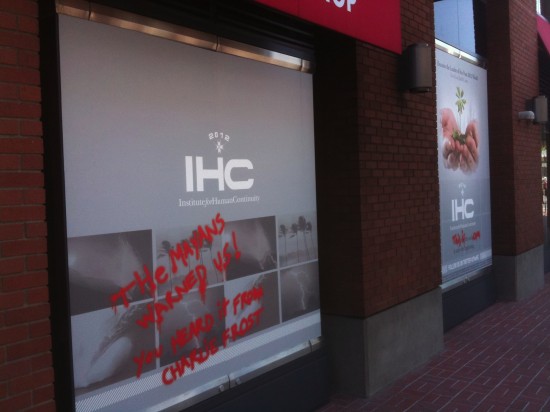
While from Christy's preso you'll see that transmedia story telling is nothing new, especially in the world of fiction and film production, I think that it is getting more and more common. We are not surprised to see a computer game released at the same time as the latest Marvel cinema release, we expect it. Or when District 9 was promoted at Comic-con in the US, it wasn't mind-blowing that a team of MNU trucks locked down San Diego and a series of pre-graffitid posters sprung up over night. This is just how we demand movies to be sold to us now.

Some might say its all about eye-balls, that if consumers are switching off the TV in favour of the Web then naturally the dollars will follow where the eye-balls go. And this is right, but at the same time there is another aspect to transmedia that we are demanding and its that of reciprocity and co-creation.

Reciprocity in that if I am going to follow a story across media (chase the rabbit down the hole as it were) then I'm going to want reward in return. Mindless consumption via the idiot-box is over, mindful consumption through multiple media now commands respect. In as much, free downloads now act as rewards for following story-lines, prizes via ARGs go to those who dig the deepest into a story and online games attached to stories act as town-squares where consumers consume together.

And consuming together brings me onto my next point about co-creation. That a story is filmed/written, edited and distributed was once a nice process that meant everyone could play their part, received a cheque and go home to bed. Unfortunately for producers it isn't that simple any more. Consumers are now talking back, they're asking for more, wanting to get involved even. Which is where co-creation is creeping in. We see this now with characters jumping from pre-recorded episodes to live and interactive Twitter accounts (see the current Girl Number 9 web-series).

And of course, this brings me to an article I spotted in today's The Age about beating boredom in the school classroom. The article recounts the experiences and parents and teachers where students are skipping school due to boredom and some of the tactics schools are implementing to confront this problem. Not surprisingly transmedia story telling and co-creation play a large part in turning the problem around:

At Balwyn, students in years 7 to 9 start a program by watching a DVD that acts as a springboard for activities that are integrated across their subjects ...


... Resolving conflict — a theme of the movie — would be discussed in tutorial groups, with each group creating a movie to be presented at the final school assembly.

In turn, year 8 students will film news broadcasts as part of their sustainability program and year 9 students will enter into a music video competition as part of their program.


At my own work, we've been trying to extend the experience of our annual CPA Congress and broaden learning opportunities through changing what's expected (like conferences and training seminars) to providing the new and un-expected (like Second Life conference sessions and made-for-YouTube histories of members experiences).

Transmedia storytelling and the broadening of the education model are to me just two observations of how demand for a more sophisticated and communal way of consumption are mutating the old model of thinking.

So to those who still see this as an experiment or something that 'those' people do not us, all I can say is that it's too late already. The lines of communication will continue to blur. Teachers, soon your students will talk directly to you textbook author and bypass your meagre thoughts. Movie producers, make sure you keep your writers on the payroll because the writing doesn't end when the movie studio commissions your movie. I want to talk to your characters, and I expect them to listen. Between how it was and how it is now is a pretty big pill to take and takes a hell of a lot of effort, but as Tim Brown said, "we increasingly expect sophisticated experiences that are emotionally satisfying and meaningful."

Thursday, October 29, 2009

Continued rise of online video for work and play

From my posts you've probably realised that this year I've really fallen in love with online video and the various ways it can be used for business.

A couple of things have happened in the past few months that I think have strengthened my argument for an increased focus for online video for information dissemination and broader learning goals.

Firstly, Cisco, the behemoth that provides much of the infrastructure the Web lives on, has puts its money behind online video with the purchases of Flip Video maker, Pure Digital Technologies in March, and now video conferencing company, Tandberg, in October.

Supporting this strategy of pushing money and effort into online video collaboration is a report released by US Internet Network Management company, Sandvine, that online streaming video like YouTube and Hulu now accounts for up to 27 per cent of global Internet traffic. This is up from 13 per cent in 2008.

The Sandvine report has some great insights into the growth of "experience now" entertainment like streaming media and the decline of "experience later" applications such as peer-to-peer downloading.

In light of this trend and having the chance to big-note myself, here are some vox-pops videos that our team at work created for our annual CPA Congress event that takes place across Australia. As a team we filmed, edited and uploaded the videos to our YouTube channel and CPA Congress blog all within 48 hours of each event. I think it shows a really positive vibe for the conferences and is a really great promo for anyone considering going to other CPA Australia events or to CPA Congress next year.

I hope you enjoy!

Tuesday, September 15, 2009

Goin' large from your organisation


Agencies will deride our poor camera work and lack of quality, but this little gem is letting our organisation go large in ways we've never been able to before.

What's in the box is one of the tools that is giving my organisation the opportunity to go out large no only to its members, but also as importantly, to the staff in the offices around the world.

Using a consumer level HD video camera we're now able to record messages from staff and members, stream events live to members in remote regions, and generally be on-call to record important moments in our organisation that otherwise might have been consigned to history.

Here's just a snapshot of what we've been able to achieve in four months:

+ Senior managers recorded a short bio of themselves for members
+ The organisation president recorded a welcome message for members as he was not able to attend an event
+ The CEO and senior managers recorded a warm-up video for a staff event happening overseas
+ A conference session was live-streamed from Perth into Second-Life

... and coming up

+ We'll be recording vox-pops of members attending our annual Congress
+ Live-streaming more conference sessions for regional members
+ And recording many more staff and member stories

Here's what's under the hood:

+ Canon HV30 HD video camera (we chose the HV30 as its firewire out-put allows us to use the camera for live-streaming, something flash memory HD cameras cannot do).
+ Firewire 800 cable
+ Rode VideoMic for awesome sound
+ Plenty of mini DV tapes
+ One really tough case for our travels

You can pick up all that plus a nice tripod for under $1500, that's about one days worth of video from an agency. The biggest cost for our organisation was a Macbook with FinalCut Express as we didn't have one previously, but I'm sure most other organisations have a Mac or two.

One of the greatest things about having a camera inside the organisation is that now for those spur of the moment opportunities we don't need to go to an agency and get a quote, book a time an manage the post-production. Our camera gives us the flexibility to be on-call and record the stories as we need. Sure there's a little additional blood and sweat in editing and encoding the files ourselves, but I'm loving learning a new skill.

As yet none of our Semi-Pro (alright, amateur!) productions have made it to our YouTube channel - all our productions have gone large inside the business. But I'm sure in time you'll be seeing our handy work in the big lights of YouTube. Really, now that you can pick up an HD camera for about $1000 and a studio quality microphone for $150, the (YouTube ready) quality takes care of itself and what we can concentrate on is being on call to capture the best stories we can.

Friday, August 14, 2009

Overcoming the dis-embodied brain

Recently a colleague has had to work from home for extended periods. Today's technology is amazing in that it is wholly possible to do this and still work productively. With remote access to work and email applications via Citrix, diversion of office phones to mobile phones, and the use or web based wikis, IM and twitter there is no impediment to seamless remote working.

But there is a down-side. It pyschological more than anything else. It's dis-embodiment.

After a period of working with my colleague in a remote manner, the image of my colleague is fading and being replaced with the direct image I see during our converasations - a conference phone, a computer screen. It's crazy, I know, but he is turning into a dis-embodied brain, a god floating in the ether.

But there is another way. It may be a little data intensive and some options are down-right mind-blowing in their cost, but there should be no restriction in today's technologically capable world from not have visual and audio connections in remote locations.

Here are just a few options organisations can and should consider for employees working remotely:

Online video calls
Google and Skype both offer free one-to-one video calls.

Virtual worlds
Not as silly as it sounds, virtual worlds are promising to deliver the next generation of remote conferencing and offer unlimited flexibility in communicating with life-like representations of colleagues. Workplace virtual world examples include Forterra, Rivers Run Red for Second Life and some organisations are even trialling PS3 Home as a virtual communications medium.

Telepresence
TelePresence is something that Cisco has championed and the innovations coming out of Cisco really do show where remote working is heading. Life-sized imagery broadcast over digital lines is pretty amazing.

Holography
And just to show you there is always something way out there. The video below show's the next next generation of teleconferencing - Princess Leia style - holography in the boardroom.


Home offices and SMEs are perfectly positioned to leverage free online video technologies such as Google video and Skype. Larger organisations should consider distributed telepresence. I say distributed because I believe that having a system locked down to office-to-office video calls misses an opportunity to link in staff at home, customers and suppliers that all have webcams that could link in.

These are our best options for really tangible and meaningful connections via remote locations, we should embrace visual connections as much as possible and shun the dis-embodied soul.